
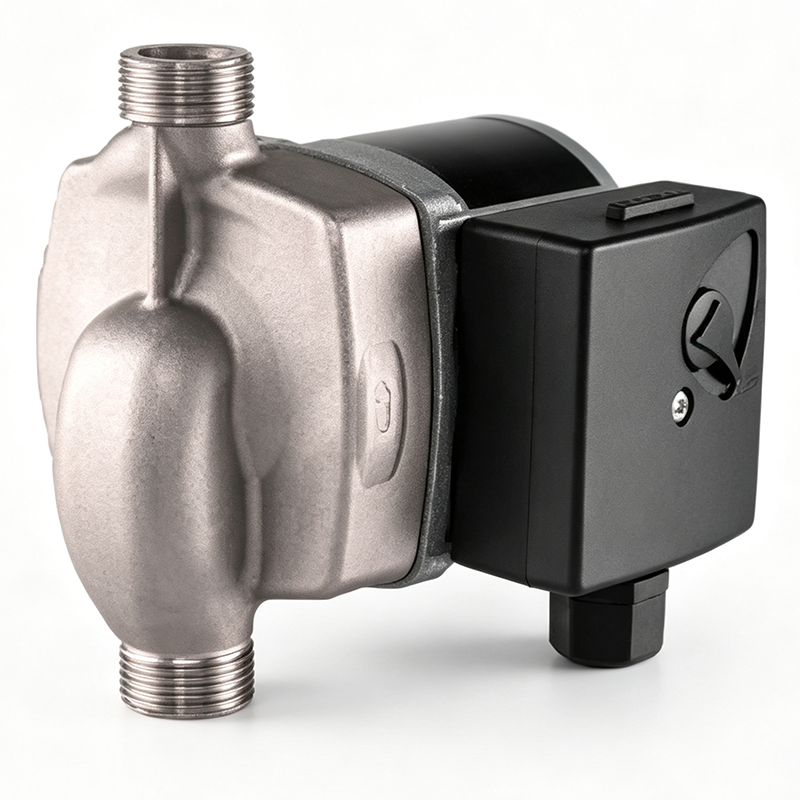
🔧 Pump Body
- Brass – UPS C
- Cast iron – UPS G
- Stainless steel – UPS S
🏠 Application
UPS SERIES pumps are suitable for central and district heating systems. The pump can operate in third gear. The pump is mainly used in single‑pipe and dual‑pipe heating systems, but also suitable for mixed circuits in large systems.
| S/N | Model | Power (W) | Max.Flow (m³/h) | Max.Head (m) | Outlet adapter | Weight (kg) |
|---|---|---|---|---|---|---|
| 01 | UPS 15‑40‑130 G | 72/50/35 | 2/1.5/0.7 | 4/3/2.5 | G¾” to G½” | 2.2 |
| 02 | UPS 20‑40‑130 G | 72/50/35 | 2/1.5/0.7 | 4/3/2.5 | G1″ to G¾” | 2.3 |
| 03 | UPS 25‑40‑130 G | 72/50/35 | 2/1.5/0.7 | 4/3/2.5 | G1½” to G1″ | 2.5 |
| 04 | UPS 25‑40‑180 G | 72/50/35 | 2/1.5/0.7 | 4/3/2.5 | G1½” to G1″ | 3.2 |
| 05 | UPS 32‑40‑180 G | 72/50/35 | 2/1.5/0.7 | 4/3/2.5 | G2″ to G1¼” | 3.4 |
| 06 | UPS 15‑60‑130 G | 95/70/45 | 3.3/2.3/1.3 | 6/5/3.0 | G¾” to G½” | 2.3 |
| 07 | UPS 20‑60‑130 G | 95/70/45 | 3.3/2.3/1.3 | 6/5/3.0 | G1″ to G¾” | 2.5 |
| 08 | UPS 25‑60‑130 G | 95/70/45 | 3.3/2.3/1.3 | 6/5/3.0 | G1½” to G1″ | 2.8 |
| 09 | UPS 25‑60‑180 G | 95/70/45 | 3.3/2.3/1.3 | 6/5/3.1 | G1½” to G1″ | 3.0 |
| 10 | UPS 32‑60‑180 G | 95/70/45 | 3.3/2.3/1.3 | 6/5/3.1 | G2″ to G1¼” | 3.2 |
| 11 | UPS 15‑70‑130 G | 130/100/65 | 3.5/2.5/1.5 | 7.5/6/4.5 | G¾” to G½” | 2.4 |
| 12 | UPS 20‑70‑130 G | 130/100/65 | 3.5/2.5/1.5 | 7.5/6/4.5 | G1″ to G¾” | 2.6 |
| 13 | UPS 25‑70‑130 G | 130/100/65 | 3.5/2.5/1.5 | 7.5/6/4.5 | G1½” to G1″ | 3.0 |
| 14 | UPS 25‑70‑180 G | 130/100/65 | 3.5/2.5/1.5 | 7.5/6/4.5 | G1½” to G1″ | 3.2 |
| 15 | UPS 32‑70‑180 G | 130/100/65 | 3.5/2.5/1.5 | 7.5/6/4.5 | G2″ to G1¼” | 3.4 |
| 16 | UPS 25‑80‑180 G | 185/170/145 | 6/5/3.5 | 8/6/4.5 | G1½” to G1″ | 4.8 |
| 17 | UPS 32‑80‑180 G | 235/175/150 | 8/7/4.5 | 8/6/4.5 | G2″ to G1¼” | 5.2 |
| 18 | UPS 20‑120‑180 G | 235/175/150 | 4/2.5/1.5 | 12/10/6.8 | G1″ to G¾” | 4.6 |
| 19 | UPS 25‑120‑180 G | 235/175/150 | 4/2.5/1.5 | 12/10/6.8 | G1½” to G1″ | 4.8 |
1. Main Features
- Three‑speed adjustable operation. Switch power output according to heating load via high/medium/low speed to balance heating performance and energy‑saving effect. Low‑speed mode effectively reduces operating noise.
- Multiple pump‑body material options: Brass pump body provides good corrosion resistance for systems with complex water quality. Cast‑iron pump body delivers cost‑effective performance and serves as mainstream choice for regular heating systems. Stainless‑steel pump body features superior rust resistance, suitable for circuits for both domestic hot water and heating.
- Canned motor integrated structure. No mechanical shaft seal, nearly zero leakage, low vibration and quiet operation, ideal for indoor residential installation.
- Compact footprint. Easy assembly and disassembly, fits for wall‑hung boilers, manifold units and piping systems with minimum installation space.
- Adaptable to hot‑water media. Capable of long‑term delivery of high‑temperature heating water, tolerates temperature fluctuation in heating circuits and supports continuous non‑stop operation.
2. Application Scenarios
- Residential central heating: Single‑pipe and dual‑pipe water heating systems, supporting radiators and underfloor heating when matched with wall‑hung boilers.
- District / building central heating: Heating systems for apartments and residential compounds, mixed circulation circuits inside large‑scale heating facilities.
- Light‑commercial heating: Water‑based heating for shops and offices.
- Auxiliary circulation for solar heating systems, for hot‑water circuit transportation.
3. Maintenance Guidelines
- Regular air venting. Trapped air inside the pump causes insufficient flow and abnormal noise. Always bleed air through the vent screw after initial startup or system water refilling.
- Water quality control. Use softened water for heating circuits to minimize limescale and rust deposit. Scale build‑up may jam the impeller, resulting in performance degradation or seizure.
- Protection during long‑term shutdown. After heating season, run the pump for several minutes every 1‑2 months instead of cutting off power completely, to prevent impeller seizure caused by rust.
- Seal inspection. Periodically check inlet and outlet connections for water seepage. Replace ageing gaskets in time.
- Filter cleaning. Clean upstream strainer regularly. Welding slag and sediment entering pump chamber will abrade the impeller and trigger noise.
4. Operating Precautions
- Never run the pump dry. The pump chamber must be filled with water. Dry‑running will burn out the motor rapidly.
- Observe rated medium temperature. Do not exceed the pump’s temperature rating. Do not pump sewage or fluid with large solid particles.
- Supply voltage shall match nameplate rating. Unstable voltage may lead to motor damage.
- Correct installation orientation. Motor shaft shall be kept horizontal; vertical upside‑down mounting is forbidden. Confirm inlet‑outlet direction as marked; reversed connection leads to zero circulation.
- Cut off power immediately upon abnormal noise or standstill. Do not repeatedly power on for forced startup, otherwise motor burnout may occur.
- Cast‑iron pump versions shall NOT be used for potable‑water direct supply circuits. Brass or stainless‑steel pump bodies are preferred for drinking‑water applications.
- Prior to disassembly and service, disconnect power supply, shut off pipeline valves and release system pressure.